A hawthorn in winter is a drawing of itself. Bare of leaves, you can finally see which branches cross, which rub, which died last summer, and where the shape has drifted over the years. That clarity is the main reason dormancy is the best time to prune most hawthorns — but the timing has a sharp edge. Cut in the right week with the right technique and the tree rewards you with stronger growth and a tidier silhouette. Cut at the wrong moment and you either lose the spring blossom or open wounds to fungi that are still active in mild, damp weather.
Why Dormancy Suits Hawthorn
Hawthorn is a tough, forgiving tree, and that toughness is exactly why a little thought about timing pays off. In midwinter the tree is fully dormant: growth has stopped, sap is not moving in any meaningful way, and there is nothing for you to disturb. Wounds made now seal over quickly when growth restarts in spring.
There is a second, less obvious advantage. Hawthorn's dense, twiggy habit hides its structure for eight months of the year. In leaf, you cannot easily tell a crossing branch from a healthy one, or see that the centre of the crown has become a knot of shade. Winter strips that away. You are working on the tree's actual skeleton, which means fewer mistakes and less unnecessary cutting.
One practical note: check for nests before you start. Hawthorn makes excellent nesting cover, and active nests should always be left alone — by late winter, most have been abandoned, but a quick look costs nothing.
When to Prune: The Window That Works
In cool temperate climates, aim for late winter: roughly late January through early March, finishing before the buds begin to swell and break. That window gives you maximum visibility, minimum risk of cold damage, and enough growing season ahead for the tree to respond.
Avoid three situations. First, hard frost. Frozen wood is brittle and cuts shatter rather than slice cleanly. Second, long spells of wet weather, when fungal spores are moving freely — if rain is forecast for days, wait. Third, autumn. Pruning in October and November leaves wounds open through the wettest, coldest months with no growth to close them.
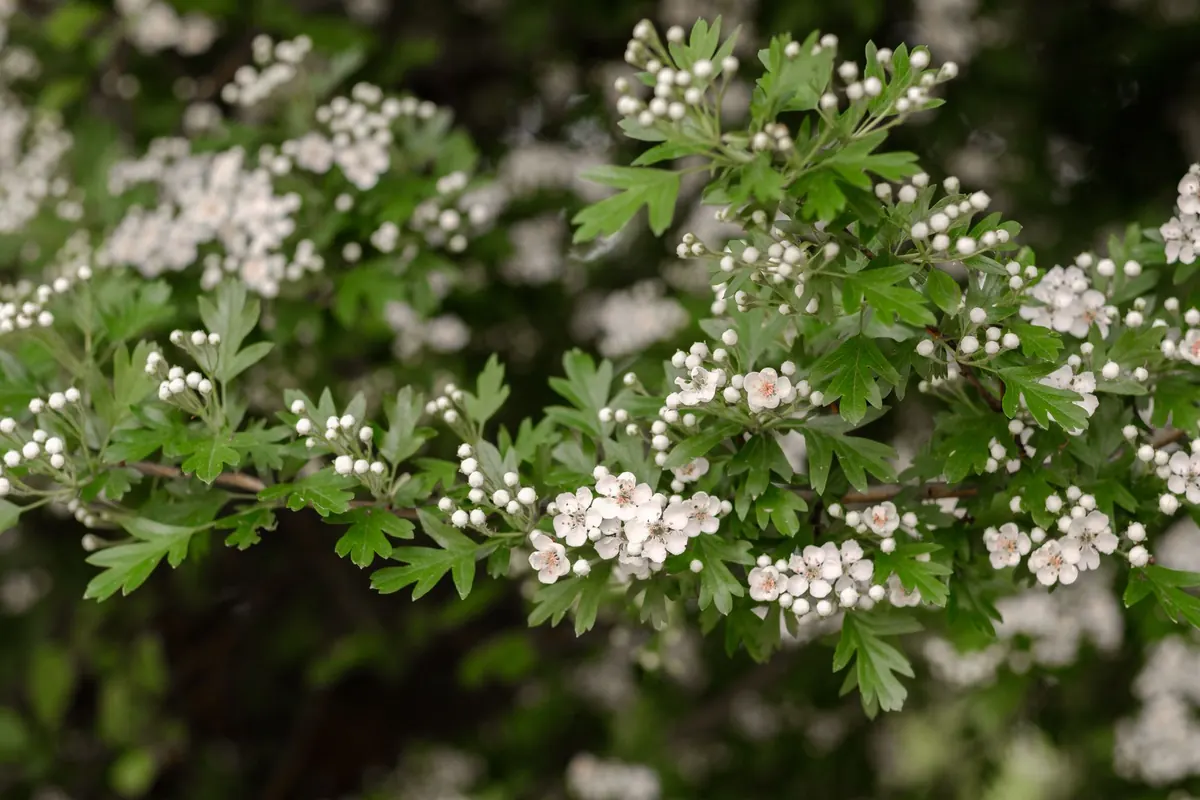
Then consider what you want from the tree. Hawthorn flowers on spurs and short shoots carried on older wood, so winter pruning removes some of next spring's blossom — and, later, some of the haws that birds feed on. If flowers and berries matter more to you than shape, prune lightly in winter and do the real work in late June or July, right after flowering. If structure matters most, winter is your moment.
Tools Worth Having Ready
Hawthorn has thorns that will find the one gap in a cheap glove, so kit matters. Sharpen everything before you begin; a blunt blade bruises wood and makes a ragged cut that heals badly.
- Bypass secateurs for stems up to pencil thickness.
- Loppers for branches up to roughly 4–5 cm across.
- A pruning saw for anything thicker, plus a pole saw if you have height to reach.
- Thick leather gloves, long sleeves and eye protection — springy branches and thorns are a bad combination near your face.
- A sharpening file and a clean cloth with methylated spirits or alcohol for wiping blades between cuts if disease is present.
- A tarpaulin under the tree to catch thorny prunings, and a stable ladder or step stool.
The Order of Work
Work from the ground up and from the obvious to the subtle. If you start by tidying the outer twigs, you will spend an hour on growth you then remove.
- Clear the base: cut away suckers around the trunk and any low branches that make access awkward.
- Remove the three Ds — dead, damaged and diseased wood — cutting back to healthy, pale timber.
- Take out branches that cross, rub or grow sharply back into the centre, keeping whichever one is better placed.
- Thin the congested middle, removing up to a quarter of the older branches so light and air can reach the heart of the tree.
- Reduce long, whippy growth that spoils the outline, cutting back to a side branch rather than to a random point.
- Step back every ten minutes and look. A branch you are about to cut will be thicker in five years, and you cannot glue it back on.
- Clear the debris. Bin or burn diseased material; do not compost it.
Making Cuts That Heal Cleanly
Two cuts do most of the work. A thinning cut removes a whole branch back to its point of origin — this is how you open a canopy without triggering a mass of new growth. A heading cut shortens a branch, and it prompts the buds below to shoot; use it sparingly on hawthorn, or you will trade a tidy tree for a thicket of new stems.
Always cut to the branch collar, the slightly swollen ring where a branch meets its parent. Leave the collar intact and the tree seals the wound itself. Cutting flush removes that tissue; leaving a stub of several centimetres invites dieback.
For limbs thicker than your wrist, use the three-cut method: a shallow undercut about 30 cm out from the trunk, a top cut a little further along until the limb falls, then a final clean cut back to the collar. This stops the bark tearing down the trunk as the weight drops. Do not paint the wound — modern advice is to leave it exposed and let the tree do the work.
As a rule, remove no more than a quarter to a third of the living canopy in a single winter. Hawthorn will survive more, but it will answer with a burst of ugly regrowth.
Young Trees, Old Trees and Hedges
A young hawthorn needs structure, not tidying. Over three or four winters, select four to six well-spaced scaffold branches and keep the centre open, removing anything that competes with the leader or crowds those chosen limbs. Keep the work light each year rather than drastic once.
An overgrown hawthorn is a different job. Do not attempt a full renovation in one go. Spread it across two or three winters, starting with dead and diseased wood and the worst crossing branches, then thinning the crown in subsequent years. The tree recovers better, and you get a chance to see how it responds.
Hawthorn hedges follow the same calendar. Cut sides and top in late winter before growth starts, and check the base for hibernating hedgehogs before you run a trimmer along the bottom. If a hawthorn is very large, close to overhead cables, or beyond what you can reach safely from the ground, bring in a qualified arborist — that is not a job worth improvising.
Aftercare and Final Checks
Pruning is the beginning of a season's work, not the end of it. Spread a mulch of well-rotted organic matter around the root zone in spring, keeping it clear of the trunk, and water the tree in its first few years through dry spells.
Expect some regrowth from the cuts. Rub out shoots appearing low on the trunk in early summer, and shorten any vigorous water shoots while they are still soft — they are far easier to deal with then than next winter.
Finally, look after yourself as well as the tree. Hawthorn thorns break off in skin easily and puncture wounds deserve proper cleaning; if a cut becomes swollen, hot or painful, get it looked at rather than waiting. Wear gloves, work at a sensible height, and stop when you are tired — most pruning accidents happen in the last twenty minutes of a long session.
Do this once properly and then lightly each winter, and the hawthorn will hold its shape, flower well and stay healthy for decades.
Photo: Svitlana Shakalova / Pexels