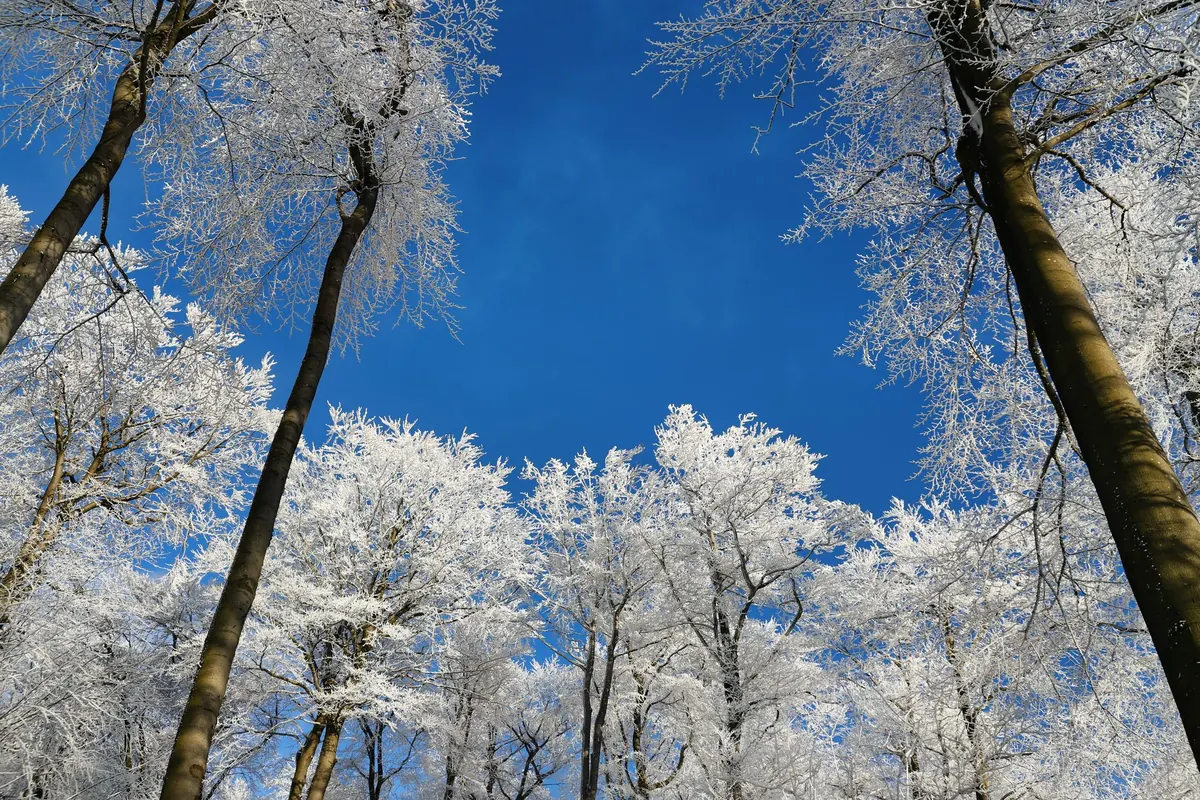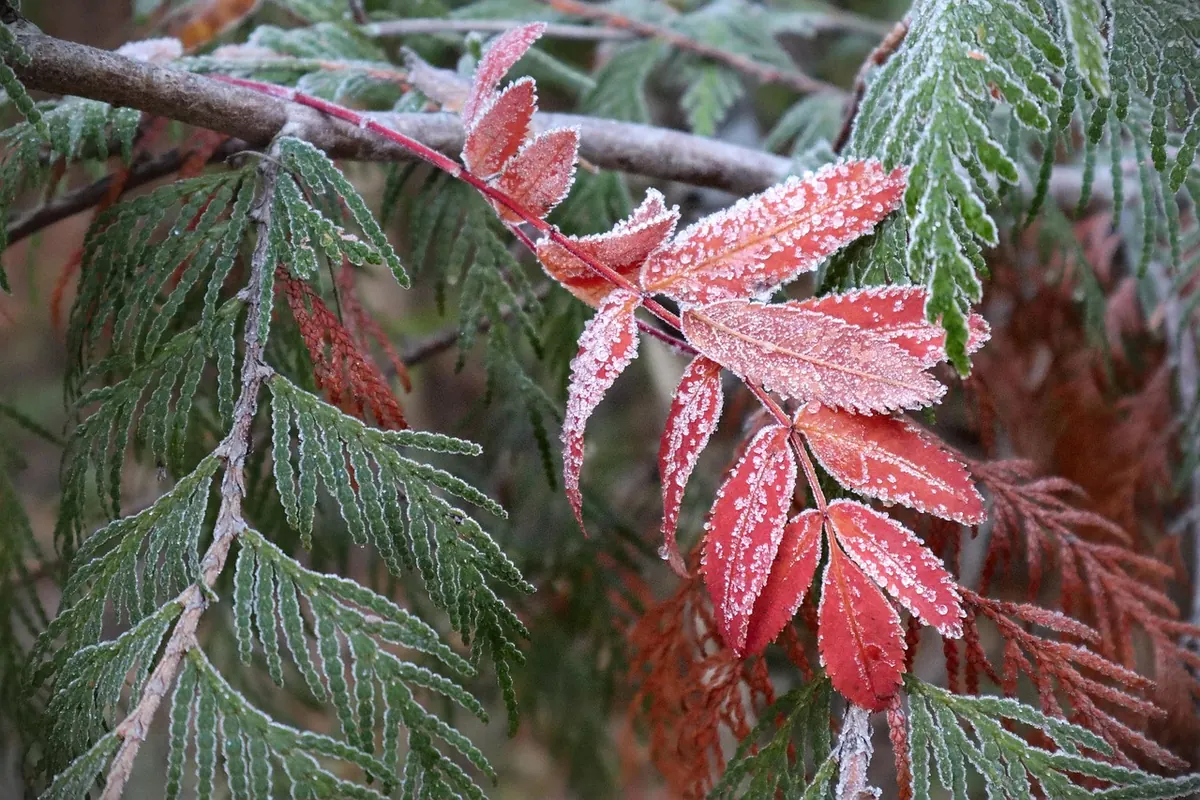
A garden in zones 3, 4, or 5 spends nearly half the year without leaves, flowers, or any color you'd call cheerful. That doesn't have to mean five months of gray sticks. The shift is simple: stop designing for June and start designing for January. Choose plants that carry their own interest in every season, then put them where you'll actually see them from a kitchen window in February. It takes more thought up front and less work afterward.
Start With Evergreens and Good Bones
Evergreens do the structural work that deciduous plants can't once the leaves drop. Treat them as the walls of the garden: they define space, slow the wind, and give snow something to sit on. In zones 3 to 5 your reliable choices are conifers — spruce, pine, fir, juniper, arborvitae — plus a smaller set of broadleaf evergreens for the milder end of that range.
A workable ratio for a small yard: one large conifer as an anchor, two or three mid-sized ones to carry the eye, and a low spreading juniper or two to tie them to the ground. Swiss stone pine (Pinus cembra) grows slowly into a dense, blue-green column and shrugs off cold. Dwarf Alberta spruce is familiar and tidy, but give it afternoon shade and a windbreak; it burns and attracts spider mites when stressed. In zone 5, add mountain laurel or a hardier rhododendron such as 'PJM' on the north or east side of a building, where winter sun won't thaw the leaves faster than the roots can replace the moisture.
Three Sources of Winter Interest
Almost everything that keeps a garden alive-looking in January comes from one of three places: bark, berries, and silhouette. Build your plant list around them.
- Bark. Paper birch, Amur maple, Amur cherry, and ninebark all show off once foliage is gone. For brightest color, cut a third of the oldest red osier dogwood stems to the ground each spring — the new growth is the reddest.
- Berries. Winterberry holds its fruit into deep winter, but it needs a male pollinator nearby; plant one male for every three to five females. American cranberrybush viburnum, black chokeberry, crabapple, and hawthorn all feed birds while adding color.
- Silhouette. Ornamental grasses left standing, sedum and coneflower seedheads, contorted willow, and weeping forms read beautifully against snow and low sun. Shape matters more than color in a cold-climate winter garden.
Plant in groups of three or five rather than ones and twos. A single dogwood is a curiosity; a drift of five is a feature you can see from across the yard.
Shrubs That Work Hard All Year
These are the backbone of a four-season border in zones 3 to 5. Each one earns its space in at least three seasons.
- Red osier dogwood (Cornus sericea) — crimson winter stems, white spring flowers, blue fall foliage. Tolerates wet soil.
- Winterberry (Ilex verticillata) — native, deciduous holly with unforgettable winter fruit.
- Ninebark (Physocarpus opulifolius) — peeling bark, clusters of spring bloom, dark-leaf cultivars for contrast.
- Panicle hydrangea — flowers age from cream to tan and hold their shape through winter. It blooms on new wood, so prune it hard in early spring without guilt.
- Black chokeberry (Aronia melanocarpa) — white spring flowers, glossy black fruit, blazing red fall color.
- Smooth hydrangea 'Annabelle' — zone 3 hardy, enormous white heads in midsummer, dried stems worth leaving up.
Trees Worth Planting for Winter
Serviceberry gives you spring bloom, June berries, and orange-red fall color in one plant, with smooth gray bark that looks good in February. Crabapples hold small fruit that birds work through all winter; choose a disease-resistant cultivar rather than whatever is on sale. Japanese tree lilac extends the season with creamy flower clusters in late June and develops cherry-like bark with age.
Paper birch is the classic, but it sulks in hot, dry spots and is vulnerable to bronze birch borer. Plant it in a grove of three, keep the root zone shaded and mulched, and water during drought. If you want something unexpected, try a larch: a conifer that turns gold in autumn, drops its needles, and stands bare until spring.
Use Microclimates and Drainage to Your Advantage
Cold air behaves like water. It sinks and pools in low spots, so the bottom of a slope can run several degrees colder than the ground twenty feet uphill. Plant your marginally hardy choices on higher ground or against a building, and save the frost pocket for the toughest natives.
A few habits matter more than any plant choice:
- Water deeply in autumn until the ground freezes, especially young evergreens. Dry roots going into winter cause more damage than cold.
- Mulch two to three inches deep, keeping it clear of trunks. Mulch moderates freeze-thaw heaving that pushes small plants out of the soil.
- Skip late-season fertilizer, which pushes soft growth that winter kills.
- Plant in spring or early fall, giving roots at least six weeks before hard frost.
- Add a windbreak of arborvitae or spruce on the prevailing wind side if your lot is exposed.
If your soil is heavy clay that stays wet, plant in a raised bed or amend generously. Roots sitting in cold, saturated soil through winter rot far more often than they freeze.
Fill the Ground Layer Without Fighting the Climate
Spring bulbs are the cheapest four-season investment you can make. Plant daffodils, Siberian squill, and species tulips in fall in loose drifts through your perennials; they'll come up before the shrubs leaf out and disappear politely afterward. For summer and fall, stick with plants that are reliably hardy: peonies, daylilies, coneflower, sedum 'Autumn Joy', and ornamental grasses such as feather reed grass, switchgrass, and little bluestem.
The single most common mistake in cold-climate gardens is cutting everything down in October. Leave stems and seedheads standing until late spring. They hold snow, catch low winter light, feed birds, and protect crowns from temperature swings. Tidy it all in April, not November.
A Practical Order of Operations
- Walk the yard in January and note where snow piles up, where wind rips through, and which windows you actually look out of.
- Place your evergreen anchors first — one large, a few medium, some low spreaders.
- Plant winter-interest shrubs where you'll see them daily: along the driveway, by the front door, outside the kitchen sink.
- Add trees last, choosing for bark and fruit as much as for summer shade.
- Finish with bulbs and perennials, then mulch and water everything in.
Do this once, resist the urge to rearrange every spring, and you'll end up with a garden whose best month might not be June at all. For many of us in zone 3 and 4, it's the still, bright morning after a snowfall, when the dogwood stems and birch trunks finally get the backdrop they were waiting for.
Photo: Musekaw / Pixabay